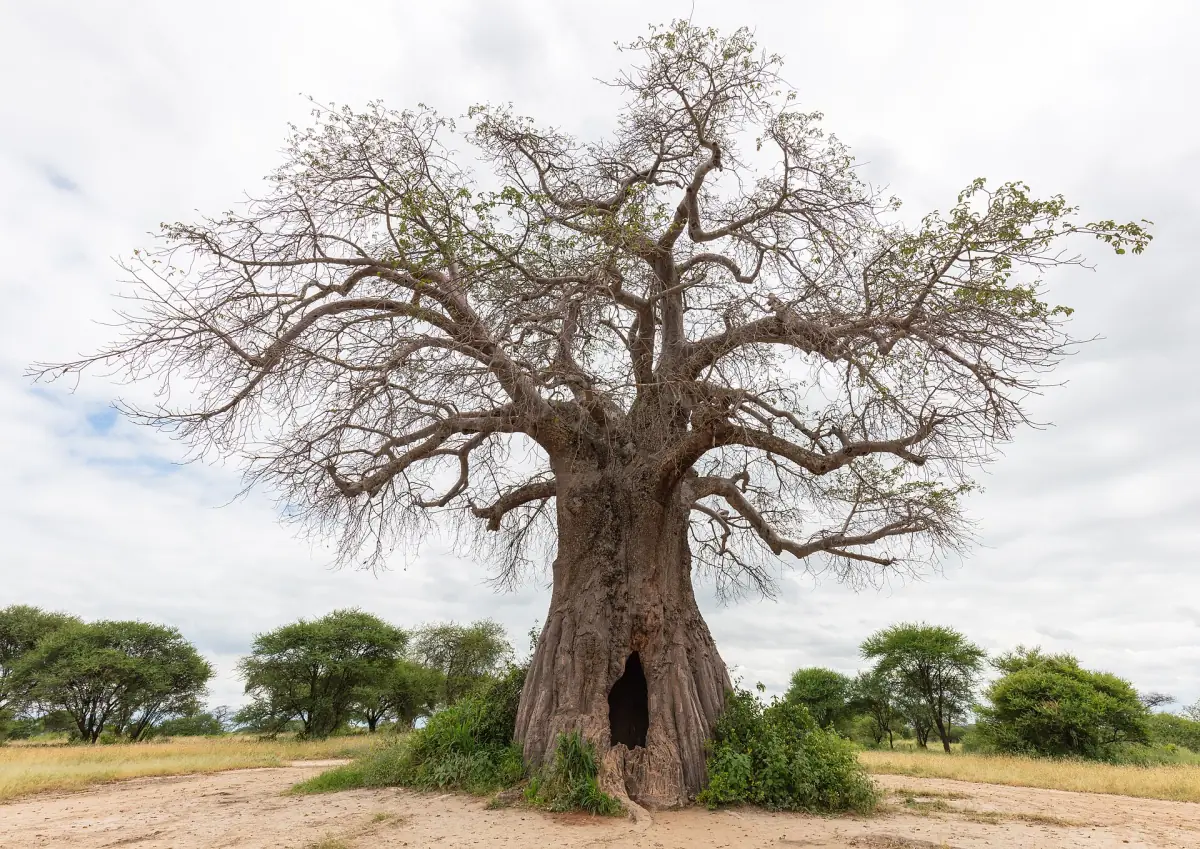
The baobab tree in Tarangire
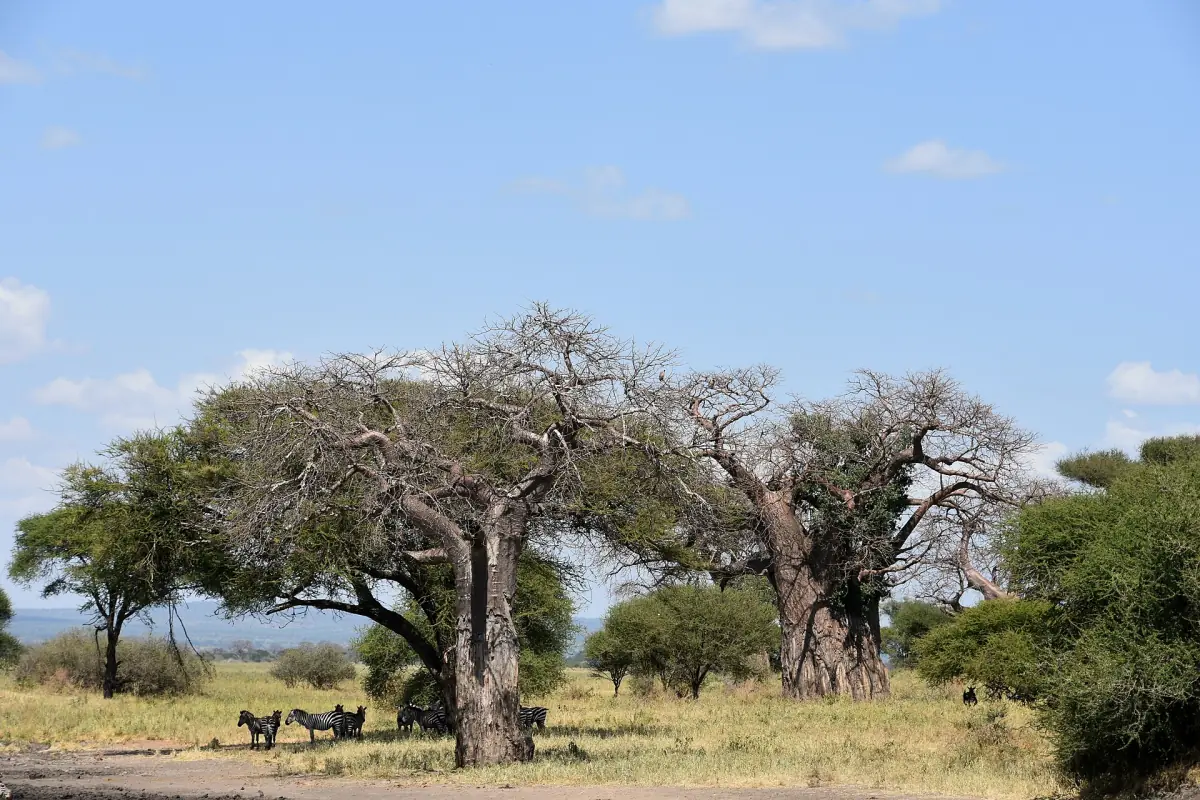
The baobab is called Adansonia digitata by botanists and is native to Tanzania. It is a deciduous tree of dry tropical habitats, which means it drops its leaves in the dry period. In Tarangire the trees stand on the hills and across the savannas, and baobab-covered hills are part of the landscape. On a game drive they are the most obvious feature after the animals.
Baobab ages are hard to pin down, so the numbers below come with their context.
Baobab tree facts
The main points in a table.
| Topic | What is known |
|---|---|
| Species | Adansonia digitata, an accepted species native to Tanzania |
| Type | Deciduous tree of dry tropical habitats |
| Height | Usually no more than 20 m, possibly up to 28 m |
| Dated age | About 1,275 years for one tree in Namibia, dated by radiocarbon |
| Possible maximum age | Up to 3,000 years, with a trunk girth of more than 100 feet |
| Water | Elephants break open trunks to reach water inside the tree |
For most visitors, the useful summary is that the baobabs of Tarangire are very old and very large, but the individual trees you drive past have not been dated. A guide can show you the biggest trees along your route.
Our pick: elephants and baobabs day trip
This day trip is built around the park's baobab country and elephants, with a pop-up roof for photos.
Hand-picked tours, booked through GetYourGuide. Prices are indicative starting prices in US dollars (as of October 2026). Tap a tour for live availability and the current price in your currency.
Tarangire safaris past the baobabs
Game drives and day trips through the baobab country of Tarangire, from Arusha and from the lodges around the park.
How old is a baobab?
Two numbers that should not be mixed.
A radiocarbon-dated baobab in Namibia is about 1,275 years old. That is a measured age for one tree, and it is not a Tarangire tree and not a universal maximum. The oldest baobabs may reach up to 3,000 years and a trunk circumference of more than 100 feet. The two numbers describe different things: one is a measured age, the other a possible maximum.
The same goes for size. The usual height is no more than 20 m, with 28 m possible. Individual Tarangire trees have not been measured, so a guide's "this one is 30 metres" is an estimate.
Water and elephant damage
Why elephants and baobabs are linked.
Elephants open the trunk
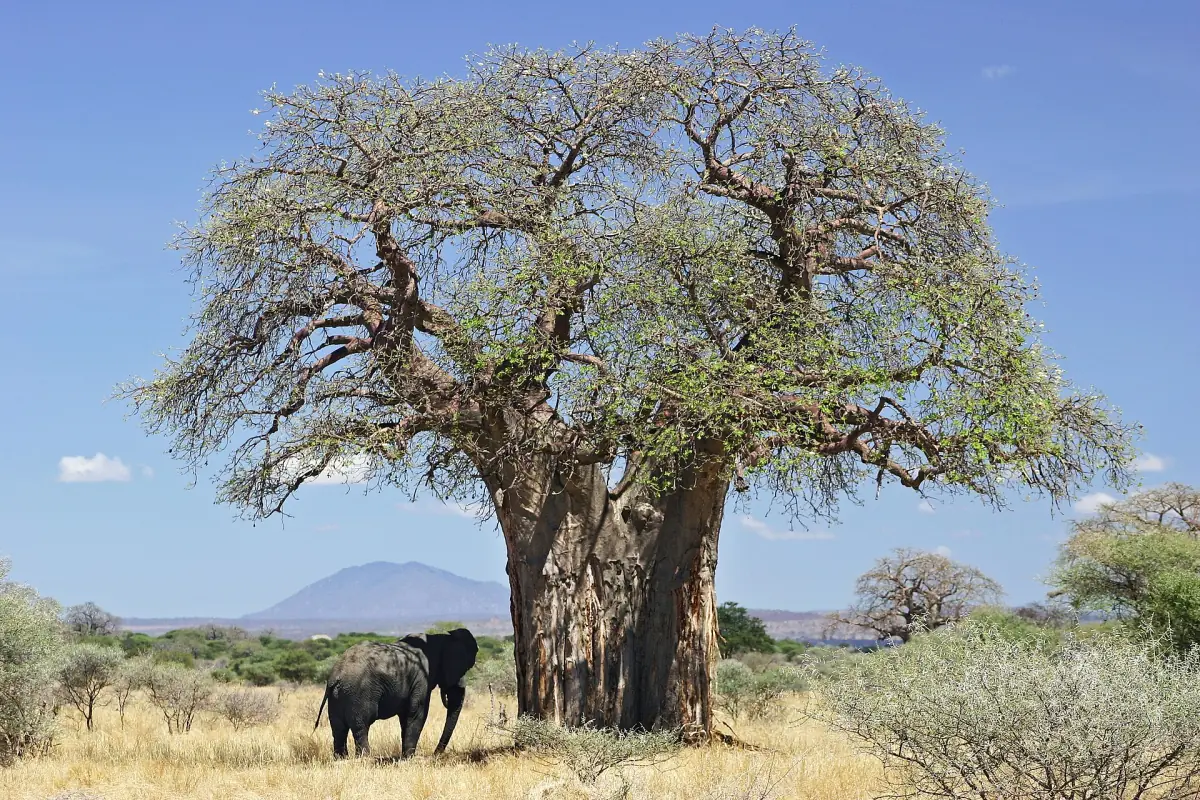
In dry times elephants break open baobab trunks to reach the water stored inside. This can damage old trees.
No fixed water volume
Treat any litre figure for a baobab with caution, because the trunk is not always full. Be careful with a number quoted on a drive.
Not every scar is from elephants
Visible wounds can have other causes. A guide who says every scar comes from elephants is simplifying.
If you want to see elephants near baobabs, the dry season works best. Read the elephants page for months and places.
Where to see baobabs on a Tarangire safari
On the hills and savannas along the game drive routes.
You do not need a special trip to see baobabs, because they line many tracks and hills. The park offers day game drives, night game drives, guided walks and balloon flights, and each shows the trees differently. A morning balloon flight starts at sunrise. Gates close at 6 p.m., so plan your evening return with your guide.
Leave the vehicle only at designated stops, and keep to the marked tracks. Giraffes and elephants can stand near the trees, which makes good photographs. For the animals around them, see the wildlife page, and for the river landscape beside the trees see river and Silale Swamp. If you add Lake Manyara to your route, its wildlife guide covers what you can expect there.
Baobab trees in Tarangire: frequently asked questions
How old are the baobabs in Tarangire?
Baobabs can reach up to 3,000 years. A radiocarbon-dated baobab in Namibia measured about 1,275 years. No Tarangire tree has been dated, so treat ages as estimates.
Why do elephants damage baobabs?
They break open the trunks to reach the water stored inside. This can hurt old trees.
How much water does a baobab store?
Treat any litre figure with caution, because the trunk is not always full of water.
When do baobabs have leaves?
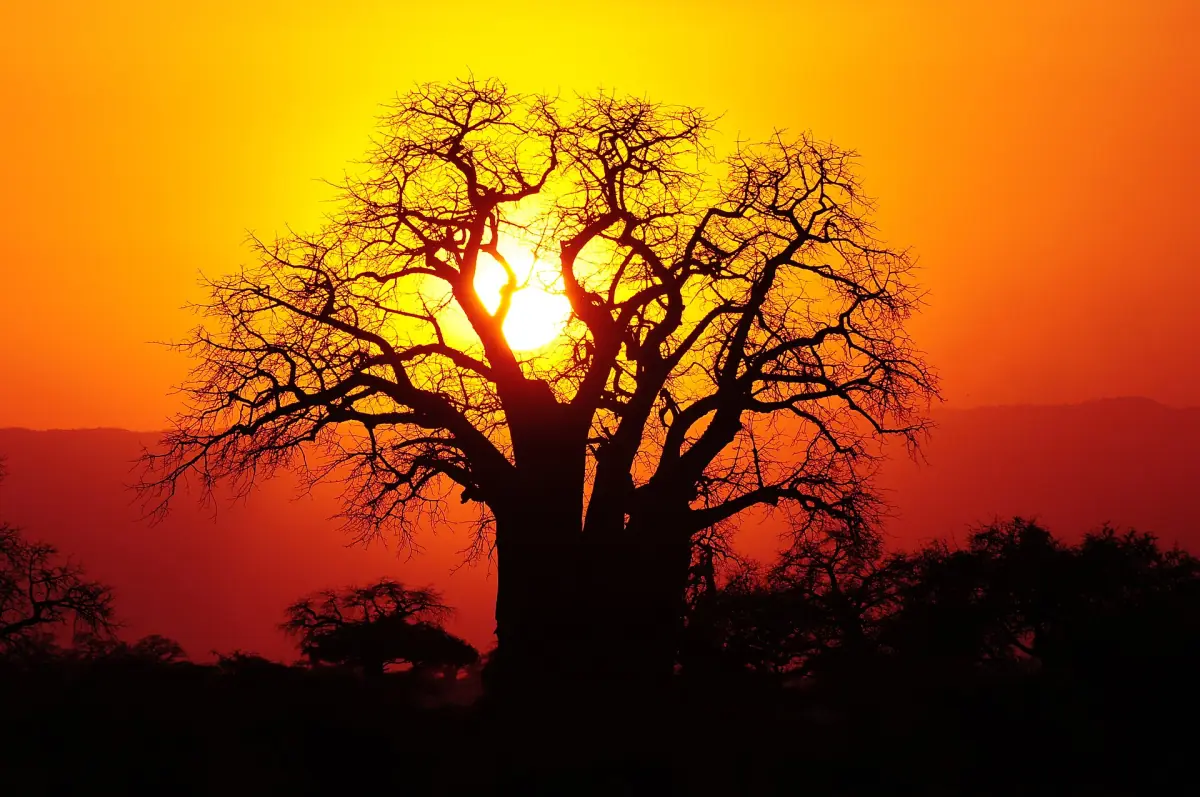
The baobab is deciduous and drops its leaves in the dry period. The trees can look bare, as in the photos on this page.
Where can I see baobabs in Tarangire?
On the hills and savannas along the game drive routes. A guide can point out the largest trees on your route. See the Tarangire safari page.
Is this site run by the park?
No. This is an independent guide with no link to TANAPA or any operator.